The Trump administration’s “Compact for Academic Excellence in Higher Education” has ignited significant debate across U.S. universities, including the University of Texas at Austin. This initiative offers preferential federal funding to institutions that adopt a set of conservative-leaning reforms. While many universities have declined the offer, UT Austin remains notably silent, raising questions about its stance and the potential implications for the institution.
Key Provisions of the Compact
The compact outlines several policy changes in exchange for enhanced federal funding:
- Admissions Policies: Eliminating race and sex considerations in hiring and admissions.
- International Enrollment: Capping international undergraduate enrollment at 15%.
- Tuition and Testing: Freezing tuition for five years and reinstating standardized testing requirements.
- Gender Definitions: Enforcing strict, biological definitions of gender.
- Curricular and Departmental Changes: Dismantling departments perceived as promoting “leftist ideologies” and limiting diversity, equity, and inclusion (DEI) programs.
These stipulations have been met with criticism from various academic and student groups, who argue that such measures threaten academic freedom and institutional autonomy.
UT Austin’s Position
As of October 21, 2025, UT Austin has not publicly announced its decision regarding the compact. This silence contrasts with the actions of other institutions; seven of the nine universities initially approached have rejected the proposal, while one remains open to further discussion. UT Austin’s lack of response has drawn attention and concern from faculty, students, and academic organizations.
Internally, UT Austin has implemented certain reforms that align with some of the compact’s conditions. For instance, the university has conducted audits of LGBTQ-related courses and restructured leadership positions. These actions suggest a degree of alignment with the compact’s objectives, though they do not confirm acceptance of the entire proposal.
Campus Reactions
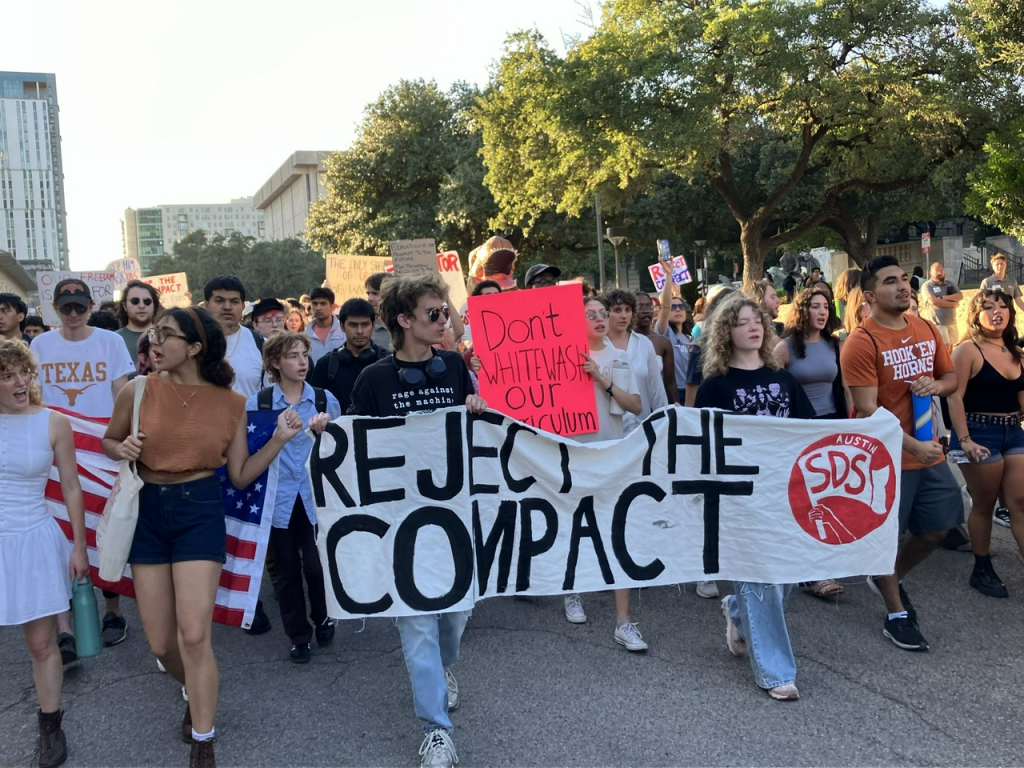
The administration’s consideration of the compact has sparked protests and petitions from students and faculty. Demonstrations have occurred on campus, with participants expressing concerns that the compact could restrict free speech and academic inquiry. Faculty members, including those from the UT chapter of the American Association of University Professors, have publicly opposed the compact, warning of its potential to undermine academic independence.
Looking Ahead
The future of UT Austin’s involvement in the compact remains uncertain. The university’s leadership has not provided a definitive response, leaving the campus community and external observers awaiting clarification. The decision will likely have significant implications for the university’s policies, funding, and its role in the broader debate over the direction of higher education in the United States.
 Texas Sweethearts DEI Forum
Leave a comment